Last update: 05/08/2024
| Author’s note: During the first half of 2024, I had the opportunity to participate in the organization of two scientific events: the “Society and AI” day (this is a topic for a futur article 😉 ) and the “AI in New Aquitaine” workshop within the PFIA platform. I’d like to share with you what these events are all about, as I believe they are important for understanding the AI research ecosystem in France. This article reflects a personal note-taking and interpretation that commits only me and no quoted structure. As an Explainable AI Researcher, European Project Leader in Trustworthy AI & a Scientific outreach mediator, I hope this article will help researchers, companies and citizens to better ask themselves questions about their digital present and future with or without AI. |
PFIA, The rendez-vous !

PFIA (means Plate-Forme d’Intelligence Artificielle in French) is THE Artificial Intelligence Platform for the French-speaking academic and industrial AI community. The aim of this platform is to bring together researchers, industrialists and students around AI conferences and workshops, most of them in French, but of course open to English speakers and presentations in English.
One month ago, PFIA 2024 was organized in France by the French AI Association (AFIA), the University of La Rochelle and the L3I laboratory, from July 1 to 5 in La Rochelle! Many thanks to them for this wonderful event!
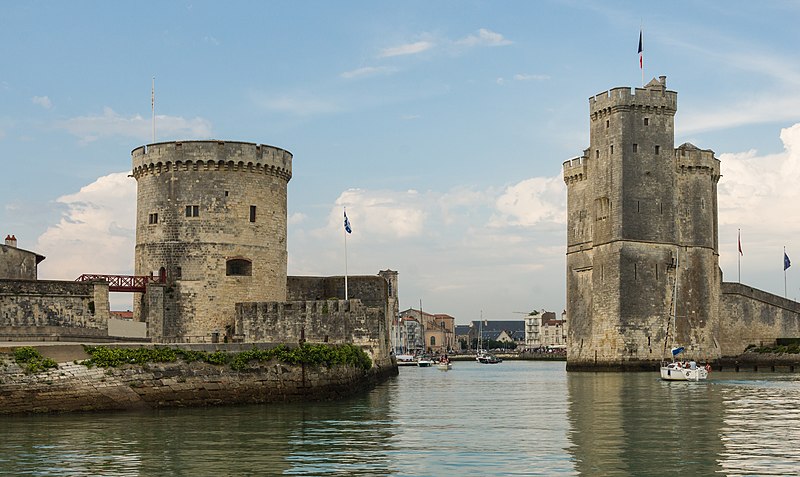


What exactly is an AI Platform?
It’s a week-long event for the AI community, bringing together in one place a number of AI-related scientific events. This year’s rich program included:
| 5 scientific conferences | 3 Scientific Days | 7 Workshops | 8 Tutorials |
| “10th edition of APIA, Practical Application of AI ” “8th edition of CNIA, National Conference on AI ” “35th edition of IC, Knowledge Engineering ” ” 18th edition of JIAF, Fundamental AI Days ” “23rd edition of RJCIA, Young AI researchers meeting” | « Agents & AI » with (1) the working group ACAI, Affects, Artificial Companions and Interactions, with a focus on human-agent interaction, by Brian Ravenet (IUT Orsay) and Nicolas Sabouret (Université Paris-Saclay), & (2) the SMA and Mobility community by Valérie Camps (Universite Paul Sabatier) and Elsy Kaddoum ((Université Toulouse 2 Jean-Jaurès) « Health and AI » organized with the support of the Association française d’Informatique Médicale (AIM) and AFIA Knowledge Engineering Science College « Society and AI » organized by the research working group ACE (Computational Aspects of Ethics) of GDR RADIA with Grégory Bonnet (AFIA, GREYC, University of Caen), Jean-Gabriel Ganascia (LIP6, Sorbonne University) and Inria Bordeaux with Frédéric Alexandre and Ikram Chraibi Kaadoud | « Defense and AI » by Émilie Bailly (INRIA), Philippe Bidaud (ONERA) and Gauthier Picard (ONERA) « Games and AI » by Anne-Gwenn Bosser (Lab-STICC, University of Bretagne Loire), Tristan Cazenave (LAMSADE, University of Paris Dauphine-PSL), Tiago de Lima (CRIL, Universty of Artois) et Bruno Zanuttini (GREYC, Université of Caen Normandie « MAFTEC, Flexible, Temporal, and Contingent Multi-Agent Planning » by Tiago de Lima (CRIL, University of Artois), Bruno Zanuttini (GREYC, University of Caen Normandie « SOSEM, Open Science and Semantics Workshop » with Nathalie Aussenac-Gilles IRIT/CNRS, Alban Gaignard CNRS-Nantes, Michelle Sibilla IRIT, University of Toulouse 3 Paul Sabatier, Cassia Trojahn IRIT, University of Toulouse 2 Jean Jaurès « CéCILIA, Creating Collaborative, Inclusive and Fun AI Events» by Anne-Gwenn Bosser (ENIB), Florence Dupin de Saint-Cyr (IRIT), Liana Ermakova (University of Brest), Nicolas Pépin-Hermann (Zoetis Denmark), Philippe Morignot « AI in the Nouvelle-Aquitaine region » with Yacine ghamri, Annick Lassus, karell bertet, Cyril Faucher et l’équipe du projet européen DIHNAMIC « GdR RADIA , RADIA Research Group (Reasoning, Learning and Decision in Artificial Intelligence)» | « Reservoir Computing : theory, insights and applications with ReservoirPy » with Xavier Hinaut and Paul Bernard (INRIA) « How to tackle the issue of bias with LLMs » with Aurélie Névéol, (University of Paris-Saclay, CNRS, LISN) Mathieu Roche (CIRAD, TETIS), Rémy Decoupes (INRAE, TETIS) « Introduction to Physics Informed machine learning – Adding physical knowledge to machine learning models » by Sarah Ghidalia (CIAD UR 7533 – University of Bourgogne) « Early decision-making » by Antoine Cornuéjols (AgroParisTech), Alexis Bondu (Orange Labs), Aurélien Renault (Orange Labs), Vincent Lemaire (Orange Labs) “Machine Learning Meets Program Synthesis” by Nathanaël Fijalkow (LaBRI, CNRS, University of Bordeaux) “Some new directions for explainable AI” by Céline Hudelot (MICS, CentraleSupélec), Thomas Fel (Aniti Toulouse, Brown University USA), Wassila Ouerdane (MICS, CentraleSupélec), Antonin Poché (IRT Saint Exupery) “An Introduction to Symbolic Explainability » by Joao Marques-Silva (IRIT, CNRS, France & UdL, ICREA, Spain) « Compliant predictions » de Joseba Dalmau (IRT Saint-Exupéry), Mouhcine Mendil (IRT Saint-Exupéry) |
| PFIA – Good to know 1) PFIA regularly takes place in the first week of July, so you can already reserve this date in your diaries for the next 10 years 😉 2) PFIA is open to AI scientists and experts, whether in the public or private sector, junior or senior. 3) PFIA is organized for and by the academic and private AI community: as a researcher, doctoral student or PhD student, you can propose workshops and tutorials to the organizing committee or directly to AFIA, and co-organize scientific days with researchers! |
ZOOM on AFIA
AFIA is the French Artificial Intelligence Association. It is a non-profit association under the French Law of 1901, whose aim is to promote and encourage the development of AI in its various forms, to bring together and help grow the French/French-speaking AI community, and to ensure its promotion.
It animates the community by organizing recurring events such as PFIA, scientific and industrial theme days, awarding thesis prizes and serving as an anchor for several research groups and working groups. Its themes are as diverse as its membership, and as rich as AI research can be, such as symbolic AI, neuro-symbolic AI, multi-agent systems, applied AI and fundamental AI. Thesis and job offers in AI are also shared on the AFIA website.
Finally, AFIA is also a member of EURAI, European Association for Artificial Intelligence, a European association of scientific associations actively involved in AI. As such, AFIA helps to bridge the gap between European and French AI research.
The annual membership fee for an individual is 30 euros, which gives access – among other things – to the days organized by AFIA, membership of the mailing list and a preferential rate for registering for PFIA each year.
| AFIA – Good to know : AFIA can sponsor events (summer schools, for example) and can also finance internal doctoral student mobility in France! |
ZOOM on the “AI in New Aquitaine” workshop by DIHNAMIC & PFIA!

On Wednesday July 3, a workshop was held to showcase AI initiatives and stakeholders in the Nouvelle-Aquitaine region. DIHNAMIC – a European project dedicated to innovation support for manufacturing companies – and the organizers of PFIA joined forces to bring together industrial and academic partners from the region and the Atlantic area around round tables and testimonials. Their objective: “to make AI accessible through 4 themes” :
(1) Data synergies for AI;
(2) AI and skills synergies: research, training, business;
(3) AI and industry synergies within the region;
(4) AI and service company synergies in the region.
The day’s events, which were followed by a convivial exchange of views, enabled participants to unite around a single slogan: “Pedagogy for guidance“. Companies need to be supported by pedagogy to take their first step in AI: acculturate before technically training teams, to empower the entire structure in the face of AI challenges and difficulties. And to do this, to not hesitate to enlist the support of the private or public ecosystem.
Theme 1, “Data synergies for AI” highlighted the fact that data management is a challenge in itself:
- in terms of its collection and provision: data storage is undeniably a cybersecurity issue, and depending on the volume considered, can also become an ecological issue
- At the technical level: finding the right architecture or tool to meet business needs and the aforementioned challenges is an unavoidable question for any project, especially since system interoperability issues may also arise.
- Perception: It’s important to acculturate your organization’s internal staff to a shared vision of project complexity. This will ensure that the expectation of “easy procedures”, which customers or certain managers may have, does not come up against the technical, financial and human resource realities inherent in an AI project requiring data and skills.
- Change acceptance: The formalization of knowledge and data exploitation protocols within a structure, in order to implement new processes or tools, is a change in itself that many structures/companies experience. Establishing new working methods to enable knowledge extraction from data (documents, videos, audio, sensor readings, etc.) involves questioning the reasons for old methods, which needs to be supported to encourage acceptance of the process change, and appropriation and adoption of the new tools or working methods.
Change linked to AI projects can be all the more delicate to manage as the subject raises questions and leads to debate among neophyte employees, experts, decision-makers and users. Acculturation in AI and data, adapted to the internal audience, can be a way of demystifying, reassuring and federating.
Theme 2, “AI and skills synergies: research, training, business”, emphasized the importance of the human element in a highly technical subject, and of the diversity of profiles and professions required for high-performance AI to serve industrial and societal needs. The theme also underlined the fact that AI is not just the prerogative of large corporations, since it is possible to benefit from it as long as the economic market – i.e., the real need to be met – is the basis for reflection. To achieve this, we need a combination of actions: good initial training to recruit juniors with the right profiles, effective ongoing training to keep our in-house staff up to date, and, last but not least, good tools! It is therefore essential to continue cultivating the link between universities and companies to develop the complementarity between training courses and real-life situations.
Theme 3, “AI and industry synergies within the region”, organized with Dihnamic, focused on 4 “AI x Industry” highlights. By giving the floor via 3 presentations followed by a round table discussion to 4 ecosystem players – a researcher, a technological research center (CRT), a company, a DIHNAMIC company referent – theme 3 aimed to highlight the complementary needs and visions of these players, particularly in view of the question underlying any AI project “How to make AI trustworthy?”.
During this theme, stakeholders discussed the interest and importance of pedagogy with industrialists. Among the challenges raised when a company wants to innovate with an academic partner, two in particular were highlighted:
(1) the difference in culture and timetable: the academic world in AI focuses on scientific publication and sharing with the community, whereas companies seek confidentiality to maintain their lead in the innovation race
(2) the compromise to be found between (i) the use of existing off-the-shelf solutions that enable rapid theoretical progress, (ii) customized services – which take longer to deliver – in line with the company’s strategic priorities and technical and financial realities, and (iii) the innovation dynamics of the AI field (technology cycles).
| CRT – Good to know : A CRT, or technological research center, is a FRENCH support structure for companies’ R&D projects. A CRT works at the crossroads between academic research and industrial issues raised by companies. Thanks to its constant monitoring and up-to-date state-of-the-art, a CRT is an interesting partner for innovation, because its positioning acts as an intermediary between two worlds, enabling innovation to be kept up to date. |
The main message shared for theme 3 was to consider the ecosystem as a pillar that helps build innovation:
- Academic research enables us to explore the feasibility of a subject, the various possible scenarios for responding to it, and their limits, through a rigorous scientific approach that builds confidence through performance metrics in these solutions.
- CRTs, as intermediaries between the academic and industrial worlds, can take innovation support a step further at the application level by formalizing the subject through specifications, for example by developing prototypes close to integration environments for the client company (prototyping in real environments and demonstrators for pre-commercialization).
- Industry services companies complement these players through their specialized field experience in a specific industrial issue or sector. In this case, support can be provided over a longer period of time, leading to a complete, qualified and operational system.
- DIHNAMIC, or EDIHs in general, acts as a one-stop shop in the regions, providing access to a wide range of expertise and professions. Its aim is to support the client company in its innovation process, from the ideation of its business issues, to the training of in-house staff, to the delivery of a prototype (if feasibility is established). Our strength lies in our ability to adapt to your company’s level of technological maturity.
Author’s note: this list of partners is not exhaustive! This is to highlight the words of the stakeholders in theme 3 by DIHNAMIC x PFIA!
| DIHNAMIC – Good to know : Dihnamic is a European and regional project supported by 13 institutional partners from the Nouvelle-Aquitaine region. Its aim is to support manufacturing SMEs in the Nouvelle-Aquitaine region in the development of a digitized, resilient, resource-efficient and ethically responsible industry, focusing on 4 areas: 1) Artificial Intelligence, 2) Robotics, agile processes and man-machine interfaces, 3) Digital twins, 4) Intelligent systems and the Internet of Things, with a cross-cutting theme of trustworthy AI! DIHNAMIC offers 28 subsidized services, free online acculturation webinars and advice from a team with complementary expertise in a wide range of fields, including financing support, ecosystem networking, ideation around business needs, technology consulting and prototype development. From idea to prototype, DIHNAMIC is a one-stop shop for businesses. To find out more: https://www.dihnamic.eu/ |
Theme 4 “AI and synergies between service companies in the region” focused on the impact of data quality on AI-based systems, and on the subject of transforming open-source algorithms from research into industrializable AI solutions. With regard to the first point, theme 4 stressed that it was not enough to have data to be able to claim AI, but that it had to be of high quality, i.e. – among other things – cleaned, structured, up to date, stored, traced and protected. This requires an effective data governance plan, because without quality data, there’s no efficient AI. With regard to the second point, while open source is a subject that the scientific community is very much in favor of, it nonetheless raises a number of issues for companies, including liability: vigilance is required when reusing code from open source projects internally within a company, as this engages its responsibility towards its own end customers, and this is all the more true for AI projects with the European AI Act regulations. Project updates, associated licenses, versions of languages used, types of data used for training, and many other elements, are just a few of the many questions that arise.
Lastly, theme 4 concluded with a round-table discussion on supporting companies in the field of AI, featuring the testimonies of support players – including BPI, the Nouvelle-Aquitaine Region and the ENTER competitiveness cluster – or those who have been supported, including public players such as the Port of La Rochelle, and companies. While the existence of a multitude of players makes the mapping of the ecosystem complex, the fact remains that it is a rich part of our ecosystem. Just as the round table emphasized the need for ongoing training to keep up to date with technical developments and anticipate innovations, the speakers also stressed the importance for companies of meeting ecosystem partners, learning about innovation in its own right and, why not, setting up a multi-skilled internal task force to weave the right support partnerships externally, while federating internally in the face of the changes inherent in innovation.
So, what to remember?
PFIA has been a recurring event since 1999, co-organized and supported by AFIA.
Dedicated to the French-speaking AI community, this event helps to create and consolidate links between the scientific, industrial and supporting communities. In the space of a week, PFIA offers an overview of the state of the art of AI in the French-speaking community and its associated concerns, whether scientific (e.g. LLMs, neuro-symbolic approach, Fairness vs. Confidence) or linked to scientific professions (e.g. what future for research professions in the age of LLMs?), or linked to the impact of AI on humans (ACAI, Health and AI Day), society (Society and AI Day) and industry (AI in Nouvelle-Aquitaine).
See you next year at PFIA 2025!

 A journey through AI and cognitive science